The seam does the talking
Every evening dress has a place where the top half meets the skirt. It might be a stitched seam, a band, a sash or the edge of a corset panel. Where that line sits changes how the whole dress reads: how long the skirt looks, how much of the dress is "top", and how the eye travels from neckline to floor. Dressmakers have used three positions for a long time, and the names are worth knowing because shops use them in product titles.
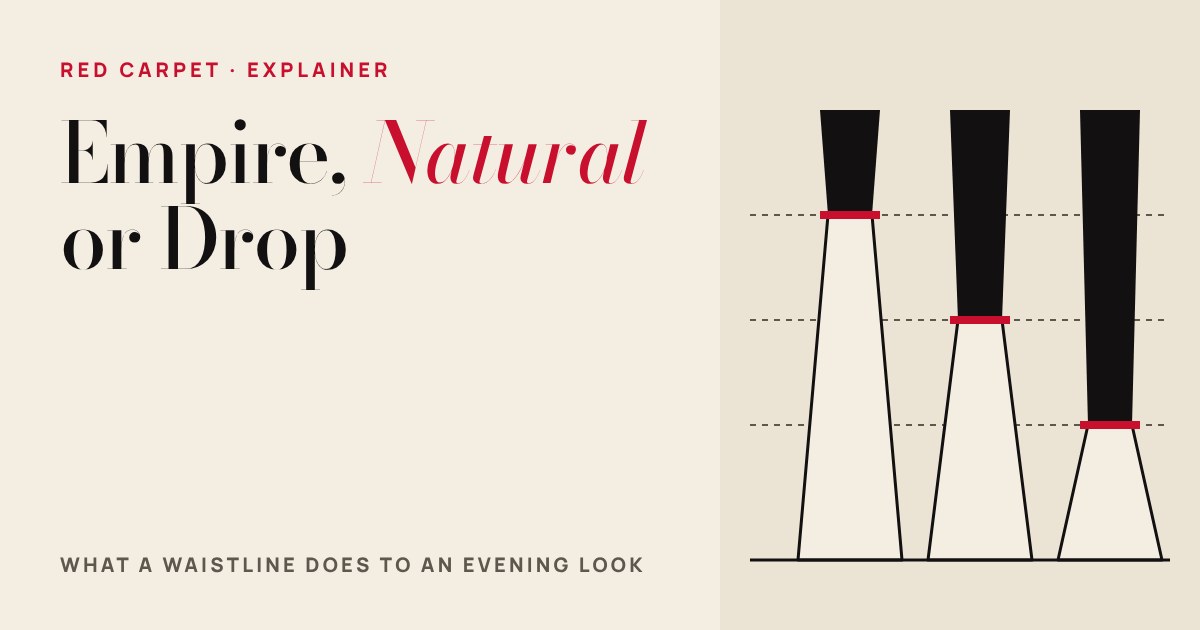
The empire line sits just under the bust and became the look of the early 1800s, when high-waisted dresses were the fashion in Europe. The natural waist sits at the narrowest part of the torso. The drop waist sits down at the hips, and is most closely tied to the 1920s. Try all three below.
Empire: the long line
With the seam under the bust, most of the dress is skirt. That gives a tall, vertical shape, and it is why floor-length empire dresses look so elegant in photographs: there is one clean line with no break at the waist. Because the fabric hangs from just below the bust, the dress asks little of you. It is a good choice for a long dinner, a summer wedding or any event where you will be sitting for a while.
It works best in fabrics with some weight and movement. A stiff fabric stands away from the body and can look like a tent; a crepe or satin falls straight and keeps the line. If the neckline is detailed, keep the skirt plain, because the bodice is small and the eye goes there first.
Natural: the structured one
The natural waist is the most common position on formal dresses, and the one with the most engineering behind it. A fitted top, a seam, sometimes boning or a corset panel: all of it sits at the narrowest part of the torso and holds the shape. The dress breaks into two clear halves, which suits black-tie dress codes where a defined, tailored look is expected.
The price of that structure is fit. A natural-waist dress sits right only if the seam lands where your waist is, so check it by sitting down, raising your arms and walking up a flight of stairs. If the seam shifts, no amount of styling will fix it. A tailor can usually take a seam in or let it out, which is why this is the easiest style to buy second-hand and adjust.
Drop: the relaxed line
A drop waist moves the seam down to the hips, so the top becomes long and the skirt short and full. The shape is looser in the top half and livelier in the bottom half, which is why drop-waist dresses are often pleated or flared and made in fluid fabric. The look comes from the 1920s, when straight, low-waisted dresses replaced fitted ones.
Because the skirt starts lower, the hem matters more. A skirt that just clears the floor keeps the line clean; one that pools can look heavy. Shoes are also more visible, so choose a heel height you can walk in, since a drop-waist skirt swings with every step.
The seam does not make the dress. It decides where the dress is divided, and everything else follows from that.
Combining the waistline with the rest
The waistline works together with the other choices in an outfit. A high empire seam and a floor-length skirt give the longest possible line, so keep the neckline simple. A natural seam with a full skirt gives strong contrast between top and bottom, so keep accessories small. A drop waist with a slit or a shorter hem shows more movement, so keep the top plain.
| Waistline | Seam sits | Reads as | Suits |
|---|
| Empire | Under the bust | Long, vertical, easy | Fluid fabrics, long evenings |
| Natural | Narrowest point of the torso | Defined, tailored | Black tie, structured fabrics |
| Drop | At the hip | Relaxed, moving | Pleats, flares, party looks |
The waistline is also the one thing a tailor cannot move. Hems, straps and side seams can all be changed, but a seam in the wrong place is permanent. When you borrow, rent or buy second-hand, check the seam first and everything else second. If you already own an evening dress that fits well, wearing it again with different shoes and jewellery is the simplest way to make it feel new.
What to look for
- Where the seam lands. Stand, sit and raise your arms; the seam should stay where it started.
- Fabric that matches the line. Fluid fabrics for empire and drop, firmer ones for a natural waist.
- A hem that fits the seam. High seams carry floor length easily; low seams need the hem to clear the floor.
- One focus. Let the waistline be the feature and keep the neckline and jewellery quiet.