Denim ·
Clean, Faded or Torn: What a Jean's Wear Does to an Outfit
Two pairs of jeans with the same cut and wash can sit in different dress codes. The difference is the finish: pocket-edge wear, faded creases, a frayed hem or a torn knee.
Tap the four wear zones, choose a top, and see where the outfit lands between smart and weekend. The piece explains why wear reads as casual, how to balance it, and what to look for in a good finish.
The wear on a jean is a message
Two pairs of jeans can share the same cut, the same blue and the same size, and still belong to different dress codes. The difference is the finish: what has been done to the surface of the denim. A clean, even pair reads as one block of colour. A pair with a frayed hem, faded patches or a torn knee reads as lived-in, and the eye files it under "weekend" before it has looked at anything else.
This piece is about that finish, which is separate from the wash (how light or dark the blue is) and from the cut (how the leg is shaped). Use the four wear buttons below to add or remove wear, then choose what goes on top. The meter shows where the whole outfit lands.
Why wear changes how an outfit reads
Clean denim is dense and even. The eye reads a solid colour as deliberate, in the same way it reads a pressed trouser. Wear breaks that evenness. Fading shows where fabric has moved, a frayed hem shows an edge that was not finished, and a hole shows the weave itself. Each of those says "used", and used clothes sit lower on the formality scale.
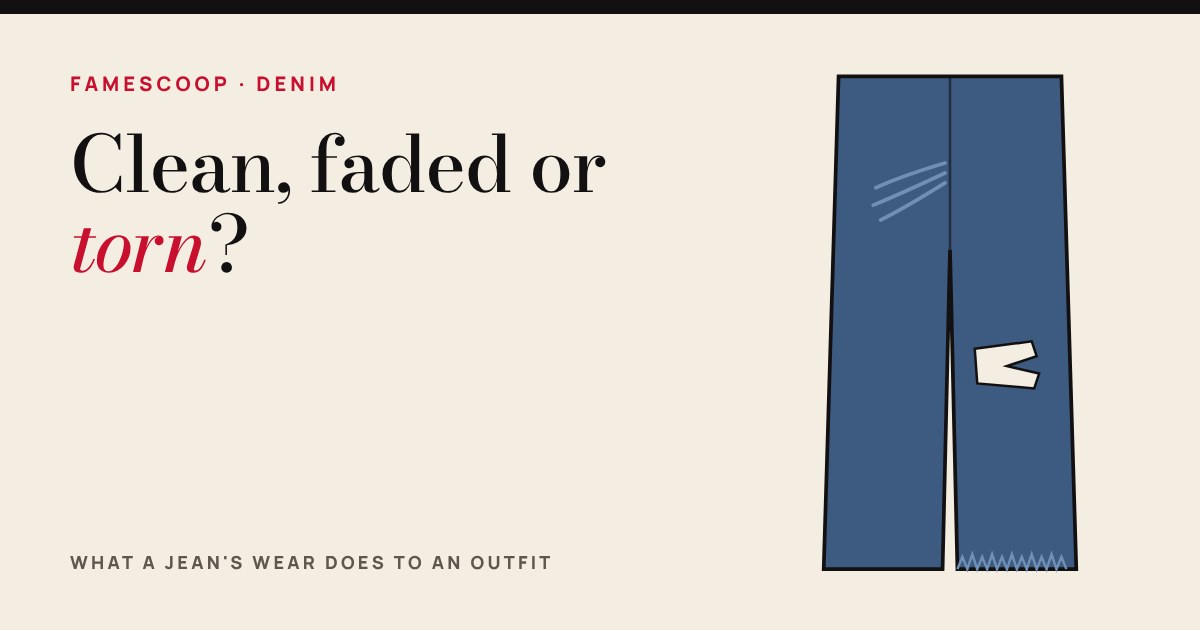
The four zones in the figure behave differently:
- Pocket edge. Slight fading around the pockets is the quietest sign of wear. At a glance it just looks like good denim that has been worn in.
- Fade creases. Light lines at the top of the leg and behind the knee (sometimes called whiskers and honeycombs) come from wearing, or from a finish that imitates it. They add texture without breaking the silhouette.
- Frayed hem. A raw, uneven hem changes where the leg ends. It works with cropped and ankle lengths, where the hem is on show anyway, and is easy to overlook at full length.
- Torn knee. The loudest one. It is the only zone that exposes skin or lining, so it carries the most weight, and the meter counts it as three.
Where the wear comes from
Real wear takes years. Factory finishing gets the same look in hours, using sanding, stone or enzyme washing, hand-scraping or laser patterns. The practical point is that a distressed finish is a design choice, not a sign of age, so you can judge it like any other detail: does it sit where real wear would, and is it even handed or random?
One loud detail and a calm outfit looks chosen. Four loud details look like an accident.
Repair is a way to keep wear going. A small hole at the knee can be darned or patched from the inside, which keeps the look at a lower volume and keeps the jean in use.
Dressing it up or down
Use the meter as a balance. Wear pushes an outfit down the scale, and a structured top, a leather shoe or a clean belt pushes it back up. Some pairings that tend to work:
- One wear point plus a tailored blazer and loafers for a relaxed office or dinner.
- Faded creases plus a plain tee and clean white trainers for a day out.
- A torn knee plus a hoodie for the weekend, and nothing else adding noise.
The rule to break: if the dress code is strict (a formal workplace, a wedding, a restaurant with a jacket policy), leave the distressed pair at home and wear a dark, clean one.
What to look for
- Evenness. Wear should follow where a jean really creases: thighs, knees, pockets. A pattern that looks sprayed on is the cheap tell.
- Edges. Frayed edges that look intentional stay on the hem or the cuff. Fraying that keeps unravelling past the seam will keep going in the wash.
- Hole size and position. A small tear on the knee stays put. A large one stretches with wear, and wide tears at the thigh get caught on things.
- Your plan for it. One finish per outfit is plenty. If you already own a distressed pair, wearing it again is the better buy than another.