Same trouser, three fronts
Two pairs of trousers can match on colour, fabric and length and still look like they belong to different outfits. A lot of that difference sits at the waistband, in a detail most people never think about: the front. Is it flat and smooth, or does it carry one fold or two?
Street-style looks lean on this detail more than they seem to. A pleated trouser under a plain tee reads as dressed up and a little relaxed at the same time. A flat-front trouser under the same tee reads as sharp and quiet. Neither is better. Each one asks something different of the rest of the outfit, and this piece shows you what.
What a pleat actually is
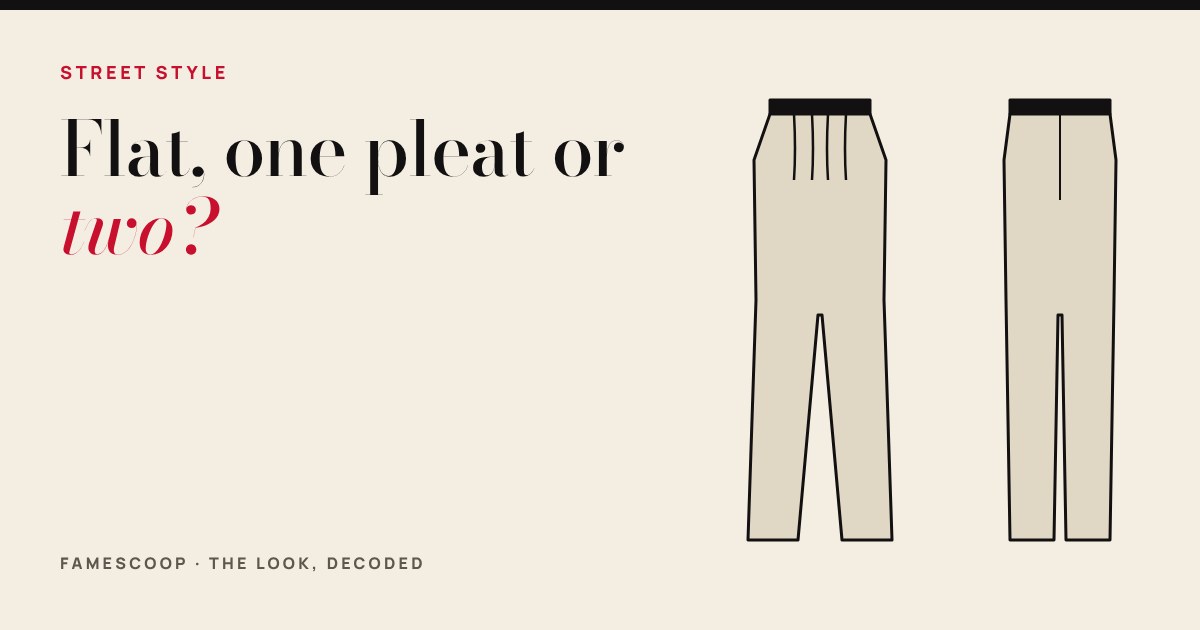
A pleat is a fold of fabric sewn down at the waistband and left to open below it. The fold gives the trouser extra material across the hip and thigh, which is why pleated trousers hang in soft vertical lines instead of following a smooth surface. A flat front has no folds: the fabric is cut to meet the waistband directly, so the line from waist to hem is clean and uninterrupted.
Two words are worth knowing. A forward pleat folds toward the zip, so it opens toward the centre of the trouser. A reverse pleat folds toward the pocket, so it opens outward. Most pleated trousers you will find today use forward pleats, and the shape in the picture below does too. The pleats are not decoration: the more of them there are, the more fabric there is to sit and move, and the more the trouser drapes. Drape is simply how fabric hangs under its own weight.
Flat front: the quiet line
A flat front is the default for a reason. It does not draw attention to the waist, so the eye goes to whatever sits above or below it: a good knit, a clean shoe, a hem that breaks in the right place. It also takes a belt without any bulk, and it keeps a tucked top smooth.
The catch is that a flat front shows everything the trouser is doing. If the fabric is thin or the cut is very slim, the surface can show strain lines. A flat front works best in a fabric with some weight, such as a wool blend, a heavier cotton twill or a dense crepe, and in a cut with a little room.
One pleat: the everyday middle
One pleat on each side is the most adaptable choice. It adds enough fabric to give the trouser some movement without changing the outline much, and it softens the sharp, office-uniform look a flat front can have. This is the cut that tends to sit best with sneakers or loafers, because the trouser looks relaxed without looking slouchy.
Two pleats: room, on purpose
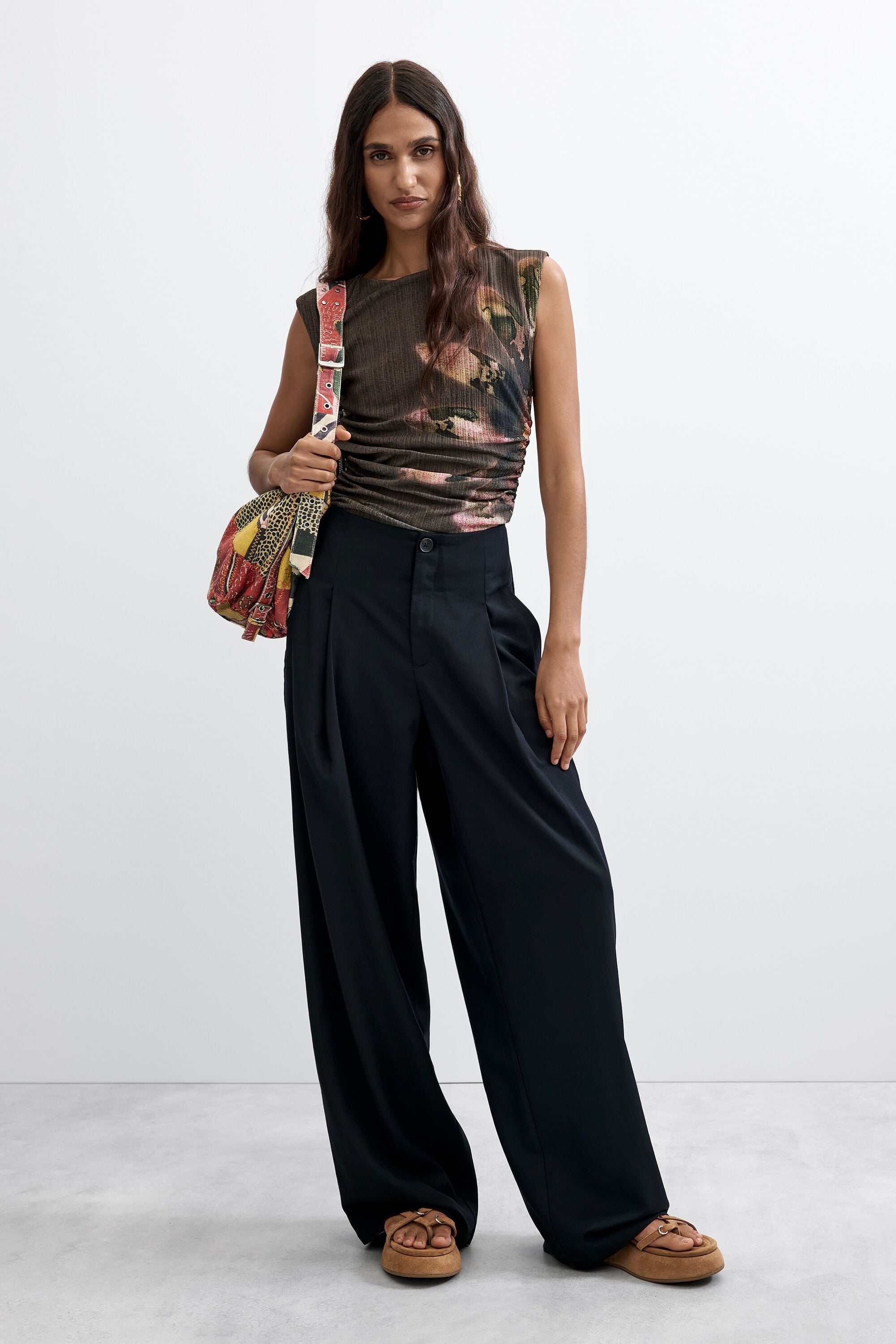
Two pleats are a statement. They open further as you stand or sit, and the trouser drapes in long vertical folds. That volume is the whole point, so it deserves a counterweight: a top that is closer to the body, a tucked shirt or fine knit, and a shoe with enough presence that the wide hem does not swallow it. Pair a double pleat with an equally big sweater and the result is just a pile of fabric.
Pleats and the leg work together. A pleat adds fabric at the top, and the hem decides whether that fabric ends in a point or a column.
How to wear each one
Choose the front by deciding which part of the outfit should carry the volume. If the top is big, keep the trouser quiet: flat front, straight or tapered. If the top is slim, let the trouser do the work with one or two pleats and a straight or wide leg. Either way, aim for one area of volume, not two.
Check the rise, too. Rise is the distance from the crotch seam to the waistband. Pleats open best on a mid to high rise, where the folds start from a waistband that sits at or near your natural waist. On a very low rise they can look like they are sliding off.
Finally, watch the hem. A tapered pleated trouser can end at the ankle with a clean line. A wide pleated trouser looks best with a small break, meaning a slight fold where the hem touches the shoe, or a hem that just skims the top of it.
The easy way to try all of this is to use what you already own. If you have a pleated trouser in the wardrobe, wear it with a top you usually save for flat fronts and notice what changes. Second-hand tailoring is also a good source, since pleated trousers were common in earlier decades and are often well made.
What to look for
- Pleats that lie flat when you stand. If they pull open, the trouser is cut too close for its size. Try the next size up or choose fewer pleats.
- A fabric with some weight. Crepe, twill and wool blends hang well. Very thin fabric makes pleats look limp.
- A mid or high rise. The folds then start from a waistband that stays where it should.
- A hem that matches the story. Tapered for a clean ankle, straight for the everyday line, wide only if the shoe can balance it.