No-Show, Ankle or Crew: What a Sock Does Between Your Trouser and Your Shoe
The sock is the smallest decision in an outfit and it quietly sets the line between trouser and shoe, the colour bridge and the weight of the whole look.
An interactive sock-and-shoe matcher lets you pick a shoe, a trouser hem, a sock height and a sock colour, then shows what that combination does and when it is worth breaking.
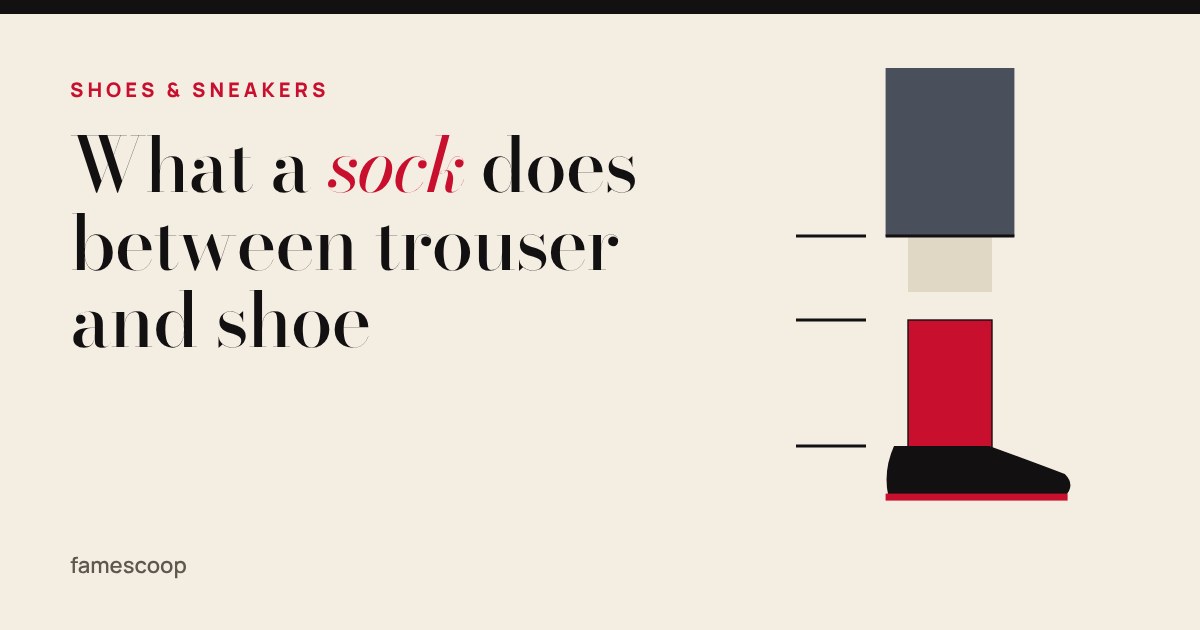
You can choose the right trousers and the right shoes and still end up with an outfit that feels slightly off. Often the culprit is the smallest thing in it: the sock. It sits in the gap between two pieces you spent time on, and it decides where the eye stops, how long the leg looks, and whether the shoe feels like part of the outfit or a separate decision.
What a sock actually does
A sock has three jobs, and each one is a choice you can make on purpose.
It sets the line. A hem, a stretch of ankle or sock, then a shoe: that is three horizontal breaks in a short space. A no-show sock removes one of them, so the trouser flows into the shoe. A crew sock (one that reaches mid-calf) adds a band of its own, and the eye reads it as a separate layer.
It sets the colour bridge. A sock the same colour as the trousers lengthens the line down into the shoe. A sock the same colour as the shoe does the opposite: it makes the shoe look taller and carries it up under the hem. A contrast sock breaks the line on purpose and becomes the accent.
It sets the weight. A thin sock with a thin-soled loafer keeps everything light. A thick ribbed sock with a chunky sneaker matches the bulk. Mixing them, thick sock and delicate shoe, usually looks like the sock was an afterthought.
Try it: the sock-and-shoe matcher
Choose a shoe, a trouser hem, a sock height and a sock colour. The drawing updates, and the notes underneath say what that combination does and when it is worth breaking.
Pairings that rarely go wrong
Loafer, ankle hem, fine knit sock. The classic. Wear a thin sock in the shoe's colour, or go no-show for summer. Keep the hem just above the shoe so a line of ankle or sock shows.
Low sneaker, cropped hem, white crew sock. The sock reads as part of the sneaker, which lengthens it. It is a sporty, easy look and works best when the sneaker is plain.
Chunky sneaker, straight trouser, ribbed sock. Match bulk with bulk. A thicker ribbed sock gives a chunky sole something to stand against.
Ankle boot, any hem. The boot hides the sock, so choose a medium-weight sock in the boot colour and stop thinking about it.
If the sock is meant to be seen, choose it. If it is meant to be hidden, make sure it stays hidden.
How to break the rules well
The rules above are a starting point. A bright sock under a dark trouser and a black loafer is a long-standing style move, not a mistake, as long as it is one deliberate accent. Three tips make it work: repeat the colour somewhere else in the outfit, keep the sock clean and unworn at the heel and toe, and let the rest of the look stay quiet.
The other common break is pattern. Stripes and small repeats read as a texture rather than a statement, so they are the easiest place to start. A bold pattern with a pleated trouser and a statement shoe is where it tends to tip into too much.
What to look for
- Fit at the heel. A sock that slides down or bunches breaks the line however good the colour is.
- Fibre for the season. Cotton blends and fine merino breathe in loafers; thicker wool suits boots and cold weather.
- Weight to match the shoe. Thin with slim, thicker with chunky.
- One you already own. Re-wearing what is in the drawer, and darning a good pair, beats buying a new one for a single outfit.