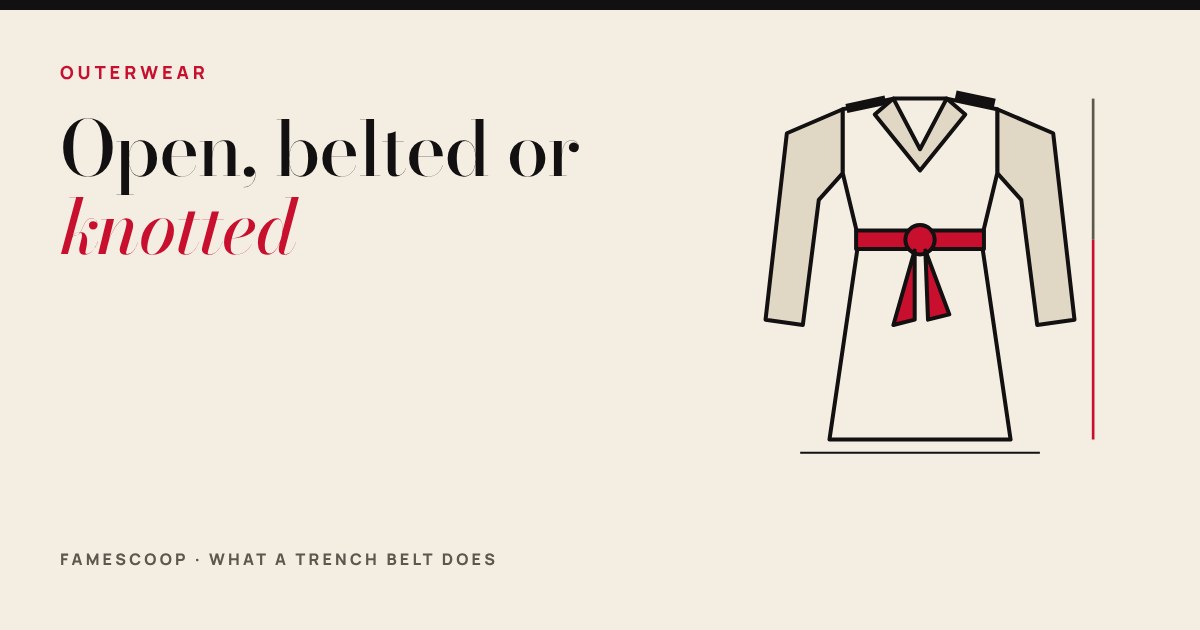
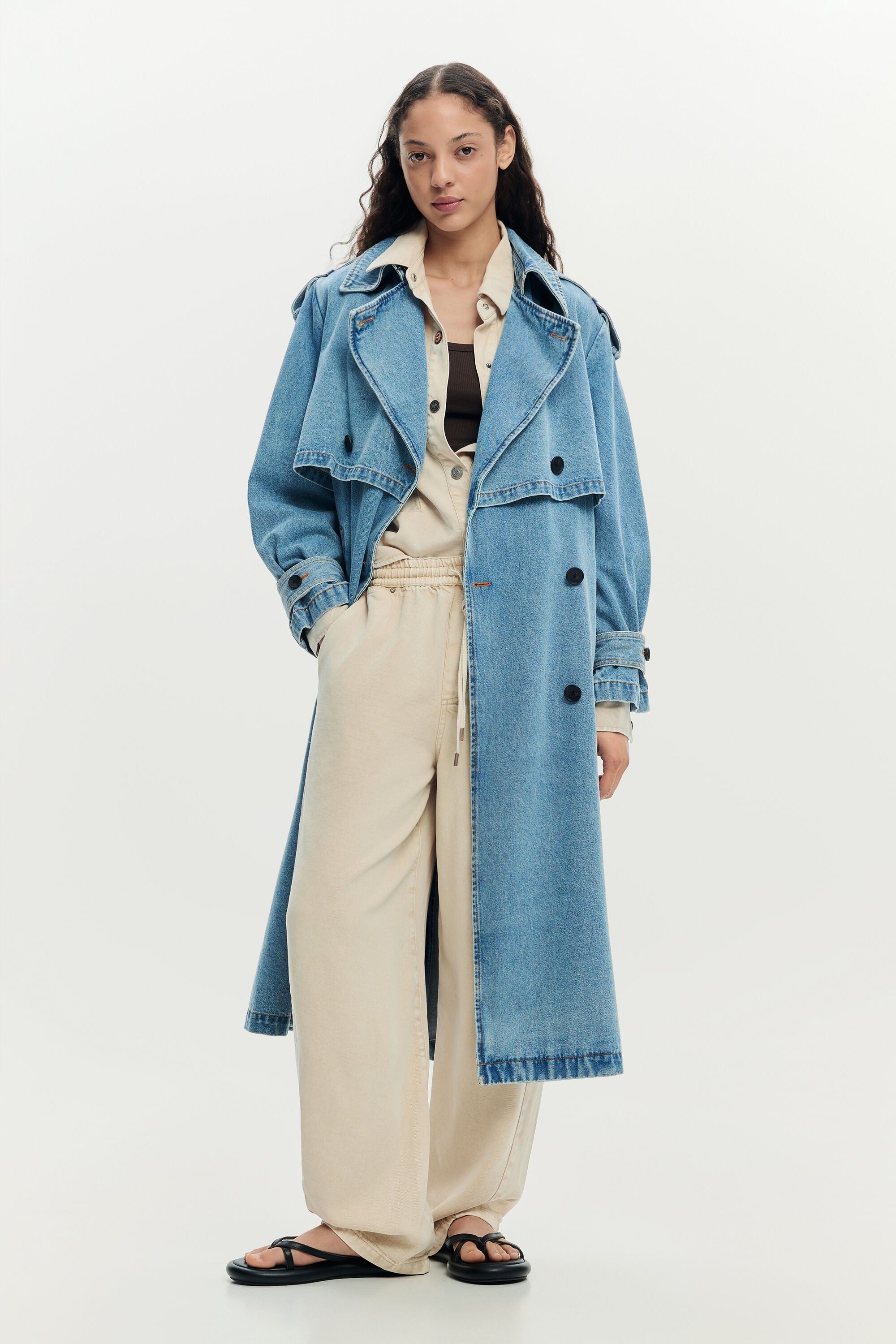
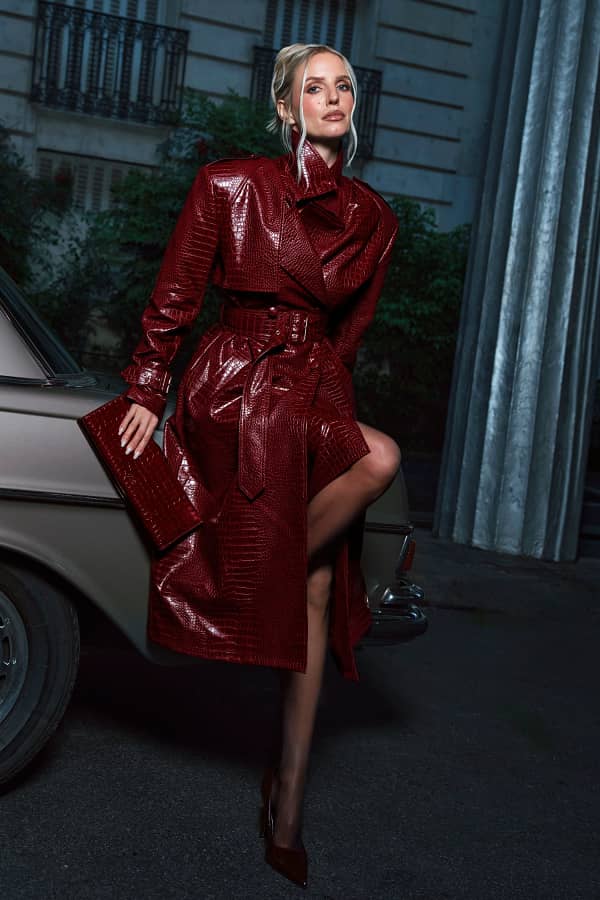
A trench coat is really four coats. Worn open, it is a long, straight line from collar to hem. Belted, it has a waist and a skirt. Tied in a knot, it turns casual. Tied at the back, it goes quiet and clean. The cut is the same each time. Only the belt moves, and the belt changes the proportions of the whole outfit.
Try the four belt positions
Why each position works
Open keeps one unbroken vertical. That is the easiest way to make a long coat look calm and expensive, because nothing interrupts the line. The belt can hang loose or be looped through its carriers so it stays out of the way.
Belted is a different shape. The belt marks a horizontal line, and the coat divides into a top part and a skirt. The classic split puts the belt a little above the middle of the coat, so the skirt looks longer than the top. Move the slider and you will see it: a higher belt gives a long skirt and a short top, while a lower one moves toward an even split that can look boxy.
Knotted keeps the waist line but drops the formality. A knot with two loose ends is relaxed and a little undone, which is why it pairs well with jeans and sneakers. A buckle looks neat and tailored.
Tied at the back is the quiet option. The front stays straight and clean, and the coat only shows its shape from behind or as you move.
The belt does not change the coat. It changes where the eye stops.
Where the belt comes from
The trench coat was developed for British Army officers before the First World War, as a lighter alternative to the heavy greatcoats of the time. The belt, the buckled cuff straps and the D-rings were all practical: the cuff straps kept rain from running down the forearm, and the D-rings were added during the war to carry items such as map cases. Both Burberry and Aquascutum claim to have invented it, so the history is still argued over. What matters for you is simpler: the belt was made to be used, and a coat built around a belt is easy to wear in more than one position.
Matching the belt to what you wear
Look at what is underneath. A fitted top and slim trousers can handle a belted coat at any height. A thick knit adds volume at the waist, so a belt can look tight and the coat can pull. In that case, leave the coat open or tie the belt loosely and lower.
Then look at the hem. A coat that ends at the knee, belted, with straight trousers gives a tidy result. A coat to mid-calf, belted, needs a clear gap between the hem and your shoes, or the outfit looks heavy at the bottom. Open, the same long coat gets lighter.
If you already own a trench coat, try all four positions in the mirror before you buy another. Second-hand shops are also a good place to find one with a sturdy belt and a lining you like.
What to look for
- Belt loops that hold. A belt with sturdy loops stays where you put it, so you can wear the coat open and belted in the same day.
- A fabric that can hold a knot. Cotton gabardine or a similar tight weave gives a crisp knot. A very thin fabric looks limp.
- A belt in proportion to the coat. A very thin belt can look fussy on a long coat, and a very wide one can look heavy.
- A hem that suits your height. Around the knee is the easiest length to wear belted or open. Check it with the shoes you wear most.
Trench coats run from around €35–60 at the low end to €100–150 in the middle. Above €250 you get more fabric and finishing choices. Any of them can work, as long as the belt and the cut do.