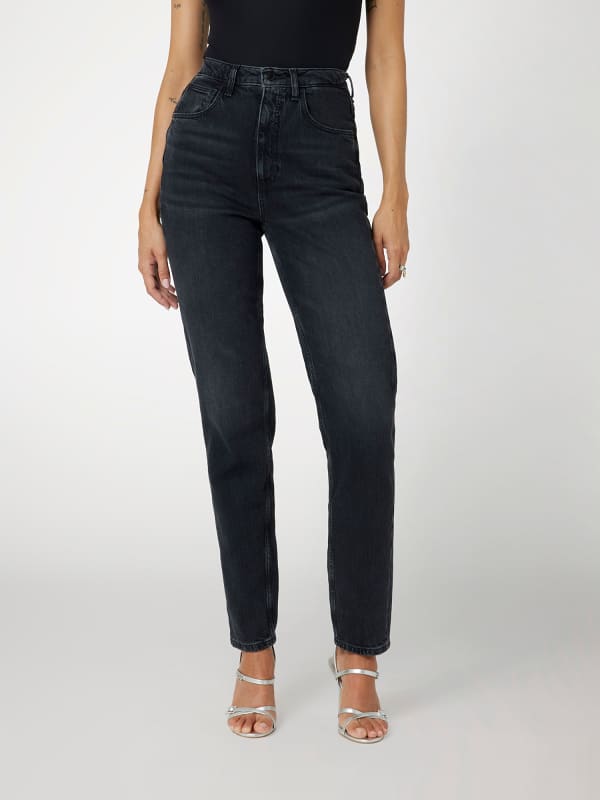
The thread is the first thing the eye reads
Look at any pair of jeans from a few steps away and before you notice the wash or the cut you see the lines: the curve across the pocket, the seam down the leg, the stitched hem. Those lines are topstitching, and the colour of the thread decides whether they fade into the fabric or draw a drawing on it.
Thread colour is a separate choice from wash (how light or dark the blue is) and from cut (how the leg is shaped). Two pairs with the same wash and the same cut can sit in different places on the smart-to-casual scale just because one has thread that matches and the other has thread that stands out. Pick a denim shade and a thread below, and the figure measures how much the thread stands out against the cloth.
Why contrast changes the formality
Formal clothes are built from large, even blocks of colour: a suit, a shirt, a dress. Visible seams break those blocks into shapes. The more the thread stands out, the more the garment looks constructed, and constructed-looking clothes sit nearer to work and weekend wear. Matching thread does the opposite and lets the cloth and the cut do the talking.
The three options in the figure behave like this:
- Tonal. Thread a touch darker or the same shade as the denim. The lines are there if you look for them and gone if you do not. This is the version that goes under a jacket.
- Gold. A warm yellow-brown thread is the familiar jean look. Its visibility depends on the cloth: on dark denim it stands out clearly, on light denim it sits much closer to the colour of the fabric.
- White. The strongest option on dark and black denim. On light denim it is closer to the fabric and loses most of its punch.
Why jeans have visible thread at all
Topstitching is a line of stitches sewn on the outside of a seam. It holds the seam flat and adds strength where the cloth is pulled most, such as the pockets and the fly. Jeans use a thicker thread than shirts do so the lines hold up to wear and washing. The colour is then a design choice: the maker can match the cloth to hide the stitching, or pick a thread that stands out and make it part of the look.
That is useful to know when you shop. Two jeans can carry the same cut, fabric and price and still feel like different garments, because the thread decides how much of the construction you see. It is one of the cheapest ways a brand changes the mood of a jean without touching the shape.
Where the thread shows most
Not every line counts the same. On a jean the lines the eye picks up first are the pocket curve, the fly and the hem, because they are on the front and at the edges. Side seams matter less on a straight leg and more on a wide one, where there is simply more leg to see. If you want a jean to sit quietly, look at those three first.
Dark cloth with light thread shouts. Dark cloth with dark thread keeps its voice down.
Dressing around it
- Tonal thread plus a shirt or a fine knit and leather shoes works for most offices and for dinners.
- Gold thread on mid or dark denim plus a plain tee and clean trainers is the easy everyday version.
- White or very light thread on black or dark denim with a simple top is a weekend outfit. Keep the rest calm so the stitching is the one loud detail.
The rule to break: a jacket can pull a loud jean towards smart. A sharp blazer with gold-stitched dark denim looks chosen, because the structured jacket carries the formality and the thread adds a relaxed note. If the dress code is strict, though, go tonal.
What to look for
- Thread against cloth. Decide how loud you want the jean to be, then check the thread colour against the shade in the product photos, not the product name.
- Even, straight stitching. Lines should run at an even distance from the seam, with no wobbles or loose loops. Uneven topstitching is a sign of rushed making and shows more as the thread gets lighter.
- Stitch length. Longer stitches look more rugged, shorter ones look neater. Neither is better; they just say different things.
- What you already own. One loud pair is plenty. If you have a gold-stitched pair, a tonal one is the more useful second buy, and second-hand denim is easy to find in both.