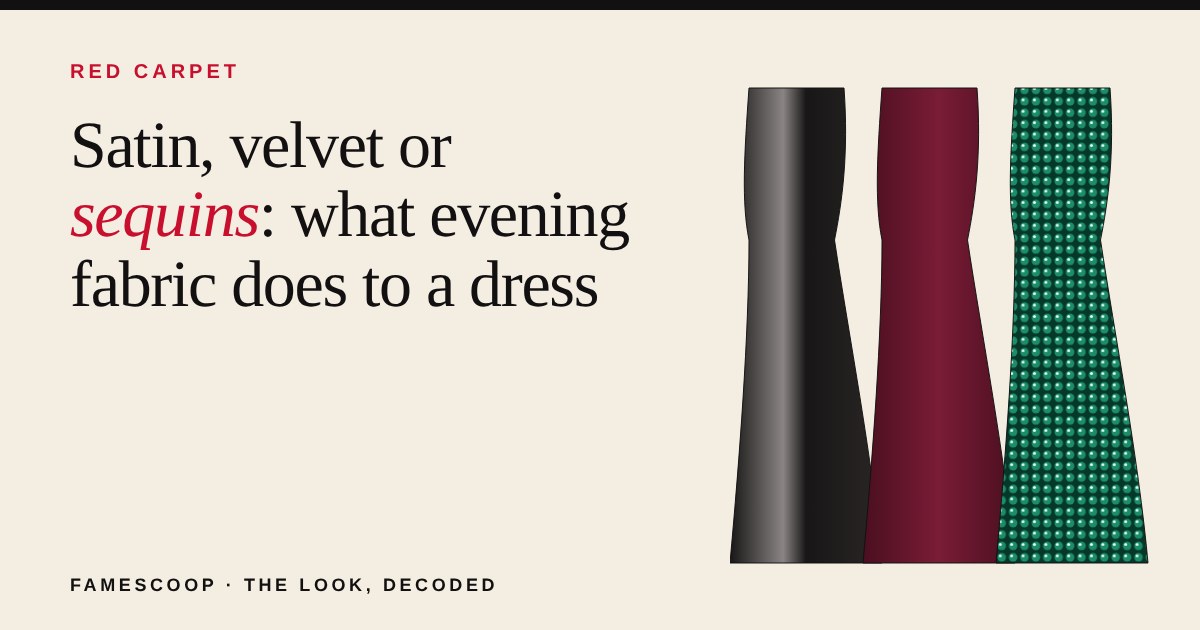
Same dress, three fabrics, three different evenings
Take one simple strapless gown and sew it in satin, velvet or sequins. The cut is identical, yet the three look nothing alike on an evening out. The difference is what each fabric does with light. Under flash, stage lighting and candles, the fabric decides whether you see a long glow, a deep colour or a field of sparkle.
That is why red-carpet dresses often keep the shape simple and let the fabric do the talking. Try it below. Pick a fabric and a colour, then drag the light from one side to the other and watch where the highlights go.
Satin: one long highlight
Satin is not a fibre. It is a way of weaving, in which the threads run over several others before dipping under, so long strands lie on the surface. Those strands can be silk or polyester, and the look is similar: a smooth, glossy face and a duller back. Because the strands lie flat, they reflect light in wide bands rather than tiny points.
The result is a dress that shows its own movement. Every fold carries a stripe of light, which makes satin the fabric of the long, simple column and the bias-cut slip. The same honesty means creases and water marks show too, so it rewards a good press and a lining with some body.
Velvet: colour that soaks up light
Velvet is woven with a dense pile of short, upright yarns. Light goes into the pile and scatters between the strands, so very little bounces straight back. That is why a wine or emerald velvet looks darker and richer than the same shade in satin, and why black velvet can seem almost bottomless.
Where the pile is pressed or folded, it catches light softly, which gives velvet its glowing edges. It is warm, a little heavy and best from autumn to spring. Because it does not glare, it tends to look calm under a camera flash that would turn satin into a white streak.
Sequins: a thousand small mirrors
A sequin is a small shiny disc sewn onto a base fabric. Each one sits at its own slight angle, so as you move, different ones catch the light and flash. The effect is sparkle rather than shine.
Because the surface is busy, folds and creases are hard to read, and the silhouette comes almost entirely from the cut. That is why sequin dresses usually keep a clean neckline and a plain shape. They are also heavier than they look, and a smooth lining makes them far more comfortable to wear.
Which one for which room
| Fabric | Light does | Works well when | Keep in mind |
|---|
| Satin | Slides along folds | The room is bright and the cut is simple | Shows creases; needs a lining |
| Velvet | Sinks in, glows at edges | Light is low or warm, in colder months | Warm and heavy; mind the pile direction |
| Sequins | Flashes in points | You want the dress to be the event | Heavy; keep the rest of the outfit plain |
Bringing the idea down to a wedding or party
You do not need a gown. The idea transfers to any dress or separate: choose one light-catching fabric and keep everything else matte. A satin midi dress with plain leather shoes and a small bag reads as dressed up. A velvet dress with flat suede shoes reads as relaxed but considered. A sequin skirt under a plain knit gets you to a party without looking costumed.
Check the dress code before you commit. Velvet and satin both suit black tie and cocktail; sequins sit best at cocktail and party level. If you own a dress in one of these fabrics already, re-wear it with different shoes or a new jacket. Second-hand is a good source here, because evening dresses are often worn once.
What to look for
- Body in the fabric. Satin and velvet should hang with some weight. Thin, clingy versions show every crease; a lining helps a lot.
- A colour that suits the light you will be in. Deep shades look richer in velvet; mid and light shades sparkle most in satin and sequins.
- Secure finishing. Sequins should be sewn firmly with a soft edge at seams and neckline. Velvet should have an even pile with no bald patches.
- One statement only. Let the fabric be the focus and keep shoes, bag and jewellery simple.
Budget guide: a velvet or sequin dress can start at around €25–50, while a well-made satin dress is often around €100–150 and up.