Budget€3.15
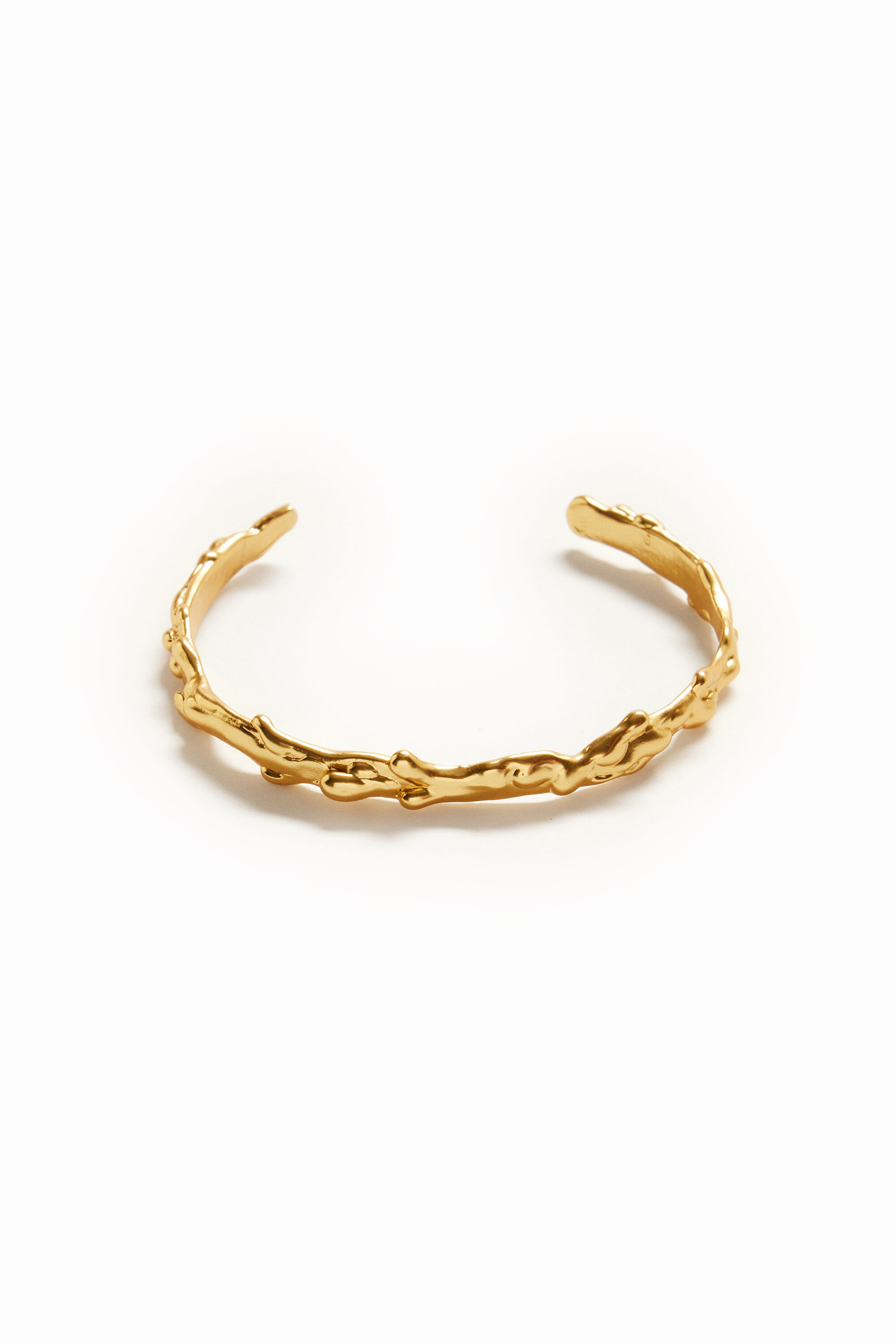
boohoo Dames Twisted Gesmolten Bangle Armband | Goud
A rigid, twisted bangle in gold-tone: an easy way to try the one-clean-line shape before spending more.
Bangle · Gold-tone · One size
A bracelet sits at the end of the sleeve, so its shape does more than its price or sparkle. A bangle is one clean rigid line, a chain is a flexible thread of light, and a cuff is a wide band that behaves like a second shirt cuff.
Try the three on a simplified forearm, change the sleeve, stack them up and add a watch to see where the shapes help each other and where they compete, then take the rules to your own wardrobe.
A bracelet does one job that no other piece of jewellery does: it sits at the end of the sleeve, right where the eye lands when you reach for a glass, a phone or a door handle. That makes its shape matter more than its price, its metal or its sparkle. A rigid ring, a flexible line and a wide band all look different on the same wrist, and they behave differently next to a sleeve and a watch.
A bangle is a rigid, closed ring (some are hinged or open at the back, but the idea is the same). It gives you one clean, hard line that keeps its shape and slides along the forearm as you move. One thin bangle is a detail. Three or four thin ones side by side turn into a texture, and you notice the stack more than any single ring.
A chain bracelet is flexible. It follows the wrist and turns with it, so it reads as a thin line of light rather than a shape. It is the lightest of the three and the easiest to wear under a sleeve, beside a watch or with other jewellery, because it never competes for attention.
A cuff is an open band, usually wider than the other two, that you slip on from the side. It is the heaviest of the three. It works like the cuff of a shirt: a graphic band at the end of the arm. That is a lovely effect on a plain sleeve and a crowded one next to a busy sleeve edge.
The question is never "which bracelet?" but "what else is happening at the end of this sleeve?"
The figure below is a simplified side view of a forearm. Pick a shape, add to the stack, change the sleeve and put a watch on the same wrist. The note underneath reads the gaps and tells you what the combination does. It is a rule of thumb, not a verdict.
The sleeve is the frame. A bare wrist, as in summer, lets the shape do all the work, so a statement cuff or a loud stack is easy. A shirt cuff is a hard, pale line a few centimetres up the arm; a slim chain or one thin bangle sits just beyond it without argument, while a wide cuff repeats the same band and the two fight.
A chunky knit is the opposite problem. It is soft and heavy, and it tends to cover whatever sits under it. A bangle will slide up under the cuff of a knit and come back into view when you reach, which is a nice small surprise on some days and an annoyance on others. A chain tucks under without fuss. A cuff is usually too stiff to hide there, so push the knit up or leave the cuff for another outfit.
The simplest rule is to match the metal of your watch and your rings, because then the wrist reads as one decision. Mixing metals works when one clearly leads: say, three gold-tone pieces and one silver-tone one that is plainly the odd detail. Two of each looks like an accident.
Pieces described as gold-plated have a thin layer of gold over a base metal, and the layer wears over time with friction, water and skin products. That is normal for plated jewellery at any price, so treat it as a piece you enjoy rather than one you keep for decades, and take it off for the shower and the gym.
Budget is the least important part. Bracelets run from a few euros to well over €100, and the idea is the same at both ends. If you already own something in a good shape, re-wearing it with a different sleeve is the cheapest experiment there is, and second-hand shops and markets are full of plain bangles and chains.
Affiliate links, marked sponsored. We may earn a commission at no extra cost to you. Pieces in the same spirit as the look, not the exact items worn. Prices checked 27 Nov; every shop is on each product page.
A rigid, twisted bangle in gold-tone: an easy way to try the one-clean-line shape before spending more.
Bangle · Gold-tone · One size
A slender gold-plated bracelet that stays light at the end of a sleeve and sits comfortably beside a watch.
Slender · Gold-plated · One size
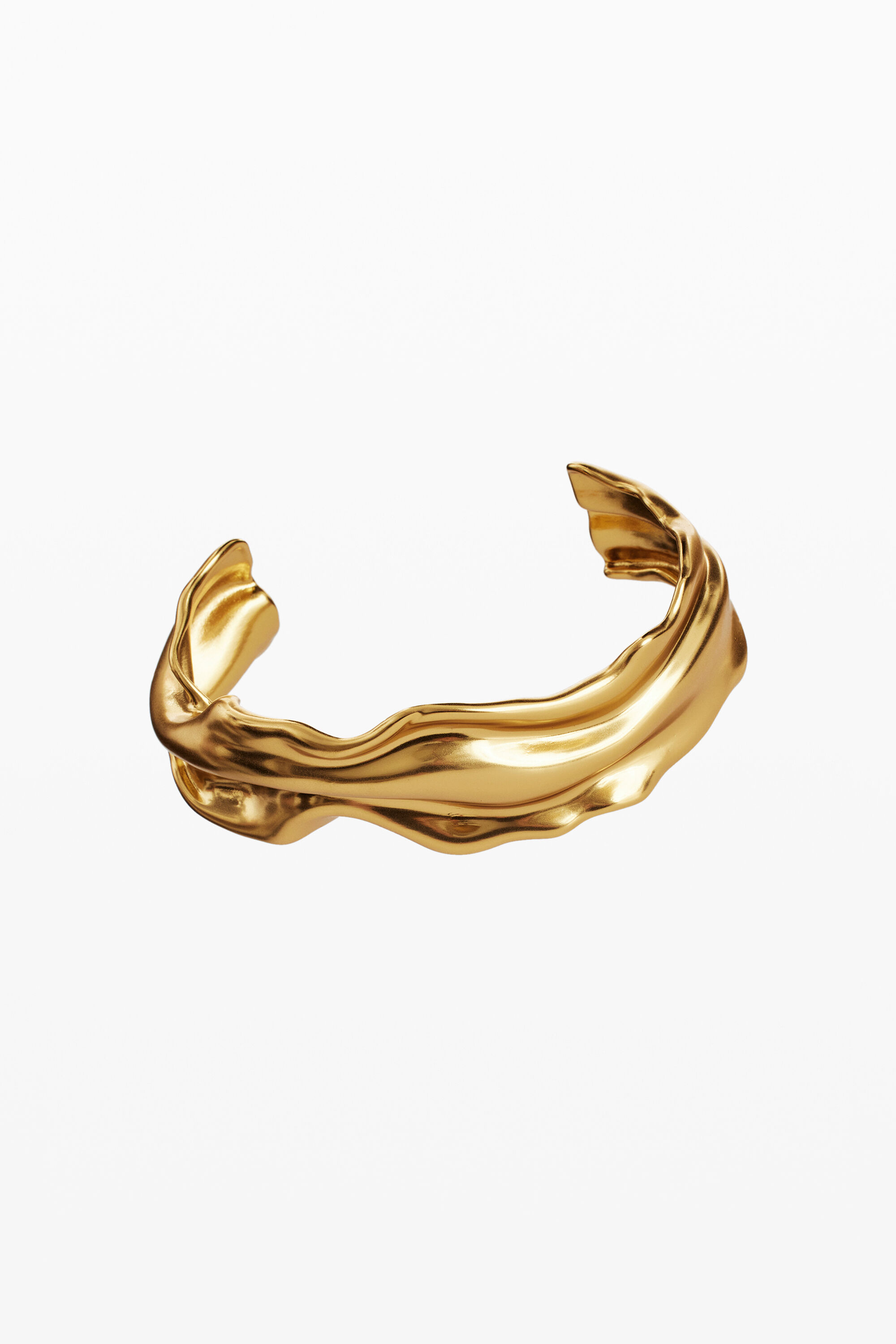
An irregular, gold-plated design with more presence, best worn on its own against a plain sleeve.
Irregular shape · Gold-plated · One size