One frame, one line
Sunglasses sit at the top of an outfit, where the eye starts reading. That makes the shape of the frame a line in the look, just like a lapel, a hem or a collar. Most advice about frames is about colour or weight. Shape is the quieter question: does the outline repeat what the clothes are already doing, or does it answer them?
This piece looks at four classic shapes, what kind of line each one draws, and how to pair them with four everyday outfits. You can try every combination below.
Four shapes, four kinds of line
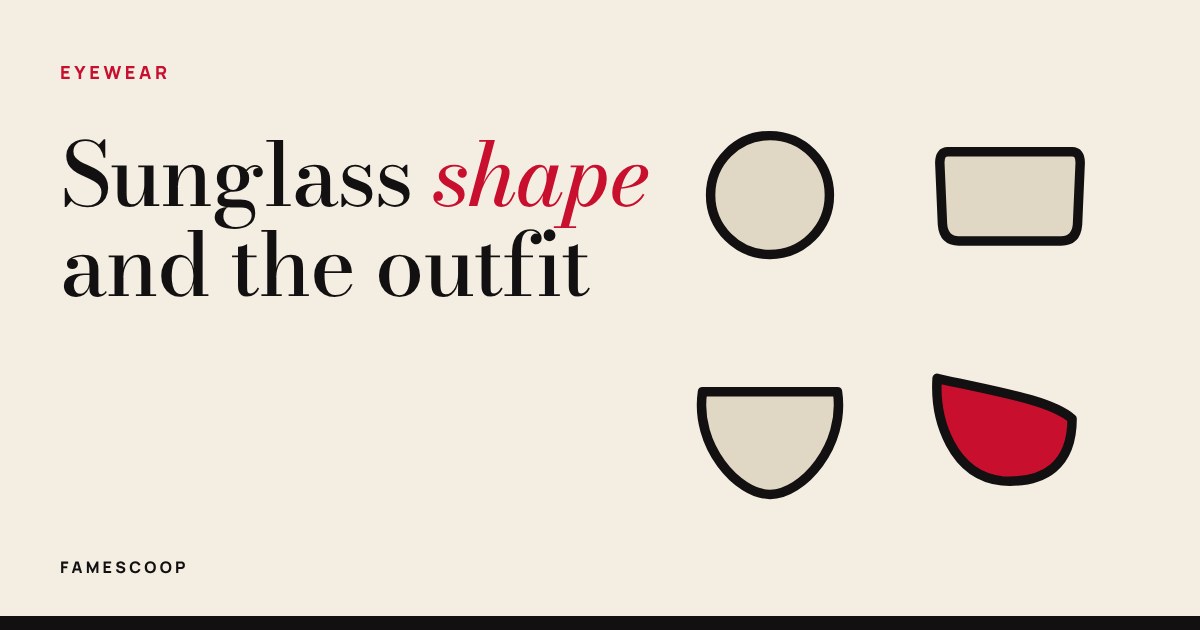
- Round. A pure curve with no corners. Soft and a little bookish, and the easiest shape to read as relaxed.
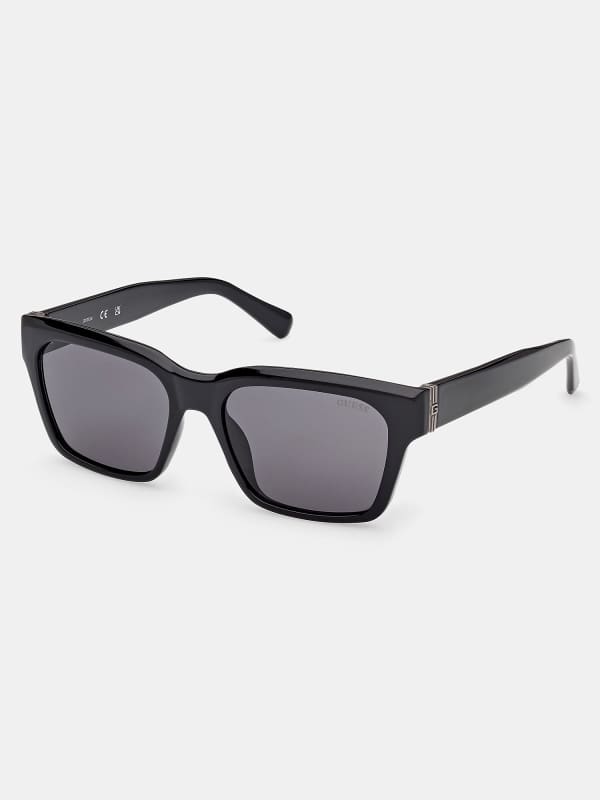
- Soft square. Straight top and sides with rounded corners, the shape often called wayfarer-style. It took off in the 1950s and has stayed a staple since. It reads as solid and graphic.
- Aviator. A teardrop, usually in thin metal with a double bar across the top. It began as equipment for pilots in the 1930s, and it still carries a little of that practical, engineered feel. Part straight (the bar), part curve (the lens).
- Cat-eye. The outer corner sweeps up and out. It became a fashion shape in the 1950s, and it is the most dramatic of the four because the diagonal does something no other shape does.
Try the pairings
The rule behind it: echo or contrast
Each outfit has a main line. A tailored jacket is made of diagonals (the lapel, the shoulder). A tee and jeans is mostly straight. Soft knitwear and a draped dress are curves. Each frame has a main line too, as in the list above.
When the lines match, the frame echoes the clothes and the look feels calm and finished. When they differ, the frame contrasts and adds a little interest, like a round frame against a sharp lapel. Both are fine. An aviator is the exception, because its straight bar and curved lens bridge both kinds of line, which is part of why it goes with almost everything.
Echo for calm. Contrast for interest. Do not do both loudly at once.
How loud is the pair?
The meter in the interactive adds up two things: how much attention the frame draws (a round or aviator frame is quiet, a soft square is firm, a cat-eye is the loudest) and how much attention the outfit draws (a tee and jeans is quiet, a tailored jacket is firm, an evening dress is loud). When the total gets high, two statements compete, and it usually looks better to let one lead. A bold cat-eye with an evening dress can work, but then the hair, jewellery and bag should stay plain.
When to break it
The rule is a starting point, not a law. If you love a frame, wear it. A cat-eye with a plain tee and jeans is a classic way to make a simple outfit look decided. A tailored jacket with an aviator is another. And if the outfit is plain and the frame is plain, it is allowed to look quiet.
It also helps to wear what you already own before buying anything. A pair you have had for years often works with more than you think, and second-hand frames are an easy way to try a new shape for little money.
What to look for
- A shape you will actually wear. Think about the outfit you wear most often and pick the shape that echoes or contrasts with it on purpose.
- Material. Thin metal looks lighter and more precise. Thick plastic (acetate) looks bolder and more graphic.
- Clean edges and an even finish. Look for a smooth outline, matching lenses and hinges that move without a wobble.
- UV protection. Check that the label says UV400 or a similar standard. This matters more than the shape, at any budget.
Frames in these shapes cost from around €10 to well over €150, and the look works at every point on that scale.