Cropped, Hip or Long: What Sweater Length Does to the Trousers Under It
Where a sweater ends decides how an outfit reads. Cropped, hip-length or mid-thigh, the same knit changes how long the legs look and which piece takes the lead.
Move the hem in the interactive below, switch trouser rise, and see the proportion change. Then use three simple combinations and four small tweaks to get the line right with what you already own.
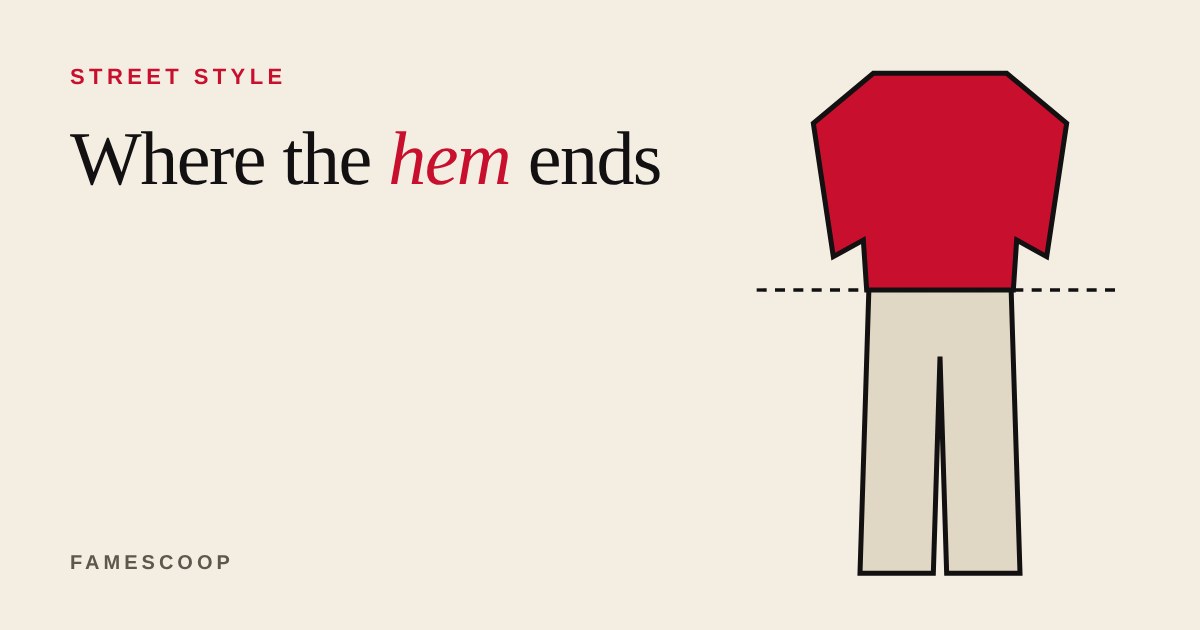
One sweater, three lengths, three different outfits
Take the same fine-knit crew neck and the same straight trousers. Change only where the sweater ends and the outfit changes completely. Street-style photographers know this: the line where the knit stops decides how long the legs look, where your eye lands, and how "put together" the whole thing reads.
That line is the hem. Where it falls against your trousers is a matter of proportion, and proportion is something you can set in thirty seconds, with no new clothes at all.
Try it: move the hem
Why the hem line matters
Your eye reads an outfit as a few big blocks. A sweater is one block, trousers are another, and the horizontal line between them is the strongest edge in the picture. Put that edge high and the lower block, the legs, looks longer. Put it low and the sweater takes over, and the legs look shorter in comparison.
Neither is wrong. Stylists often work from a loose rule of thirds: a top that ends roughly one third of the way down and trousers that fill the rest feel balanced, while an even half-and-half split feels flat. It is a guide, not a law, but it explains why a cropped knit with high-rise trousers and a long knit with slim trousers both look deliberate.
The three combinations that keep showing up
Cropped knit, high-rise trousers
The sweater ends at or just above the waistband. A thin band of skin or a shirt can show, or nothing at all if the knit is long enough to just meet the trousers. This is the cleanest way to make legs look longer, and it works best with wider trouser cuts that add volume below.
Hip-length knit, straight trousers
The most wearable option. The hem falls around the top of the hip, the rise stays hidden, and the straight leg gives a calm vertical line. If you only own one proportion, this is the one.
Long knit, slim trousers
Mid-thigh knits look best when there is clear contrast in volume: a roomy top over a slim leg, or a fitted top over a roomy leg. Roomy over roomy turns into one large shape with no edges.
Decide which of the two pieces is the main one. Give it volume, and keep the other one quiet.
Small adjustments that change the line
- Tuck the front only. Pulling just the front hem into the waistband shortens the sweater on one side and raises the visual waist, with no change of clothes.
- Fold the hem once. A single fold on a ribbed hem shifts the edge up by two or three centimetres.
- Push the sleeves. Showing the wrist breaks up a large knit so it reads as a layer rather than a tent.
- Add a collar. A shirt collar and hem under the knit adds a second, thinner line that lets a long sweater feel lighter.
What to look for
When you buy a sweater with a given proportion in mind, check four things. Hem to waist: measure from the shoulder seam to the bottom of the hem, because it tells you where the sweater will land. Ribbing: a snug ribbed hem keeps the line crisp and stops the sweater rolling up. Fabric weight: fine knits hang straight, chunky ones add width at the hem. Sleeve length: it should end near the wrist bone or slightly past, so the sleeve does not compete with the hem line.
Before buying anything, try each of your current sweaters over each of your current trousers and see where the lines fall. Most people already own at least two good combinations that they have never worn.